Janes / Malveira da Serra — Perimeter Wall Options

Security-focused wall solutions that comply with Cascais PDM regulations. Max 1.8m total: 1.2m solid + 0.6m permeable. Check whether your plot falls inside or outside the Sintra-Cascais Natural Park boundary — if outside, fewer restrictions apply.

Cascais · Janes · Freguesia de Alcabideche

The Rules at a Glance

Three layers of regulation overlap on your property

0.6m permeable
1.2m solid
← 1.8m total ← measured from road level

Road-facing walls (public side)

  • Max 1.2m in solid material (stone, render, concrete, masonry)
  • Max 0.6m above in permeable material (railings, mesh, slats with gaps)
  • 1.8m total maximum height
  • Height measured from the public road side, not your internal plot level

Between neighbours (interior boundaries)

  • More relaxed — often fully opaque up to 1.8m is accepted
  • Depends on impact to neighbours' light, slope between plots, and any subdivision (loteamento) rules

Natural Park overlay (check if applicable)

  • Janes may fall outside the Sintra-Cascais Natural Park boundary — confirm on GeoCascais or with the Camara
  • If outside the park: only PDM + RUEM rules apply (simpler, fewer material restrictions)
  • If inside: stricter aesthetic enforcement, traditional materials preferred, ICNF parecer required

Why Can't You Build Higher?

The 1.8m rule exists for overlapping reasons in Portuguese law

Road Safety

Solid walls above 1.2m at intersections and along roads create blind spots for drivers and pedestrians. The permeable upper section maintains sightlines. (RGEU, Art. 59)

Urban Integration

Portuguese planning law explicitly aims to prevent "fortress-like compounds." Private property should not create oppressive, closed-off streetscapes.

Ventilation & Light

The RGEU (1951) was drafted with public health in mind. Permeable sections allow air circulation and prevent dark, enclosed corridors between properties.

Landscape Protection

In the Sintra-Cascais Natural Park, tall opaque walls obstruct views and damage landscape character. The POPNSC adds this extra restriction layer.

Neighbourly Rights

The Civil Code (Arts. 1360-1371) balances privacy with neighbours' rights to light and air. Wall height rules enforce this balance.

Social Cohesion

Portuguese/EU planning philosophy treats gated, walled-off compounds as contrary to social cohesion. The rules consciously limit privatisation of the visual landscape.

🛠 Legal Workarounds

Ways to gain effective height or security without breaking the rules

1. Terrain Manipulation

If your plot is below road level, build a retaining wall (muro de suporte) to bring terrain up to road level, then build the 1.8m wall on top. Retaining walls are classified as engineering works, not vedacoes, and follow different rules. 2-3m retaining walls may be permissible with structural justification.

Warning: Deliberate terrain raising purely to circumvent wall rules can be challenged. Must have a legitimate engineering justification (drainage, slope stability).

2. Hedges — No Height Limit!

There is no height restriction on living hedges in most Portuguese municipal regulations. Plant dense cypress, laurel, or privet behind or on top of a 1.8m wall for a 3m+ effective visual barrier. In the natural park zone, native species are preferred. Civil Code (Art. 1366) only lets neighbours demand cutting of branches that overhang their property.

3. Sloped Terrain Advantage

On sloping sites, the 1.8m is measured at each point along the slope (not averaged). A wall on a steep slope can be significantly taller at the downhill side while still complying at every measured point.

4. Setback / Internal Walls

A wall set back from the property boundary (inside your land) may be subject to different, more lenient rules than a wall on the boundary line. Some camaras treat internal walls differently.

5. Request an Exception

The Camara can grant exceptions via a pedido de licenciamento with justification (security concerns, noise, specific site conditions). Discretionary — no right to approval, but it is a formal process. Document your break-in history as justification.

6. Security Tech (No Height Rules)

CCTV, motion-sensor lighting, alarm systems, and electric fencing are generally not counted toward wall height restrictions. These can dramatically improve security without touching the wall itself.

Wall Options Compared

Each option rated for natural park approval likelihood

1. Steel Vertical Bar Panels + Anti-Climb Spikes
Grade metalica com pontas anti-escalamento
HIGH — Natural Park Approval

1.2m rendered/stone base wall + 0.6m welded steel vertical bars on top. Bars spaced ~10cm apart (too narrow to climb through). Add pointed finials or spikes on top. Unambiguously permeable — the safest planning bet.
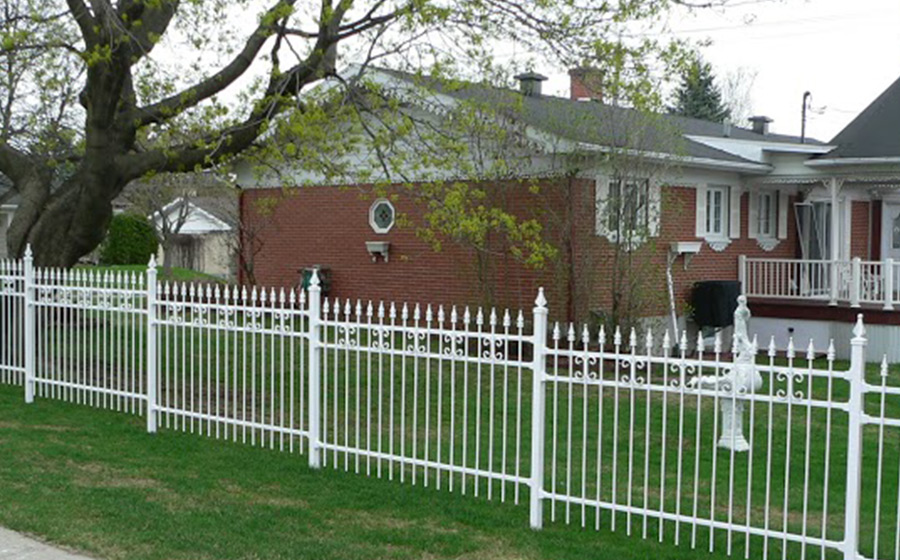
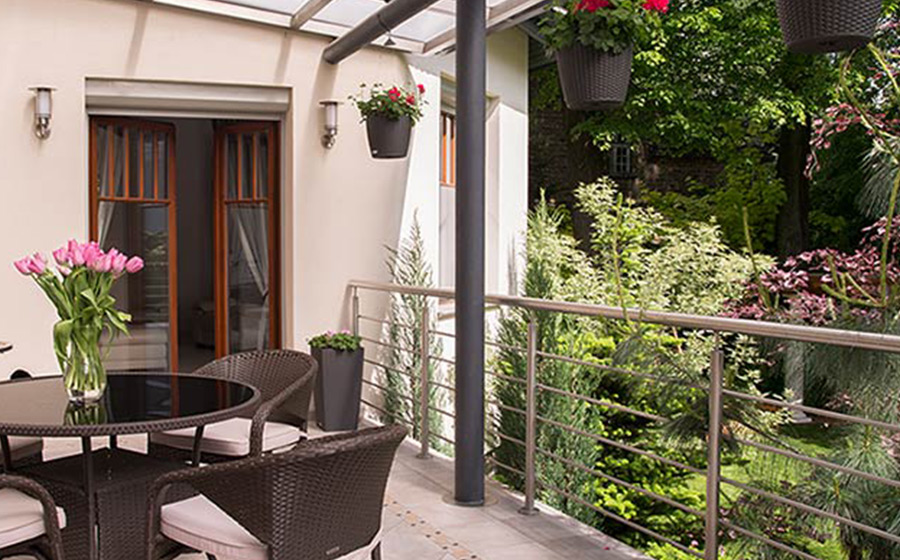
Pros
  • Clearly compliant — council never questions bars
  • Extremely hard to climb (no grip, no footholds)
  • Intruders remain visible — no cover once over
  • Low maintenance — galvanise or powder-coat
  • Local fabrication easy and affordable
Cons
  • No visual privacy from road
  • Can feel "institutional" if poorly designed
  • Must combine with hedges/plants for privacy
Best for: Road-facing walls where compliance is most scrutinised. Combine with climbing plants or a hedge behind for privacy.
2. Angled Aluminium Slats / Louvers
Laminas de aluminio com angulo de privacidade
GOOD — Needs Gap Ratio Confirmation

Aluminium slats angled at ~15 degrees block direct line of sight while remaining technically permeable (air and angled light pass through). Modern, low-maintenance. Pair with 1.2m solid base.
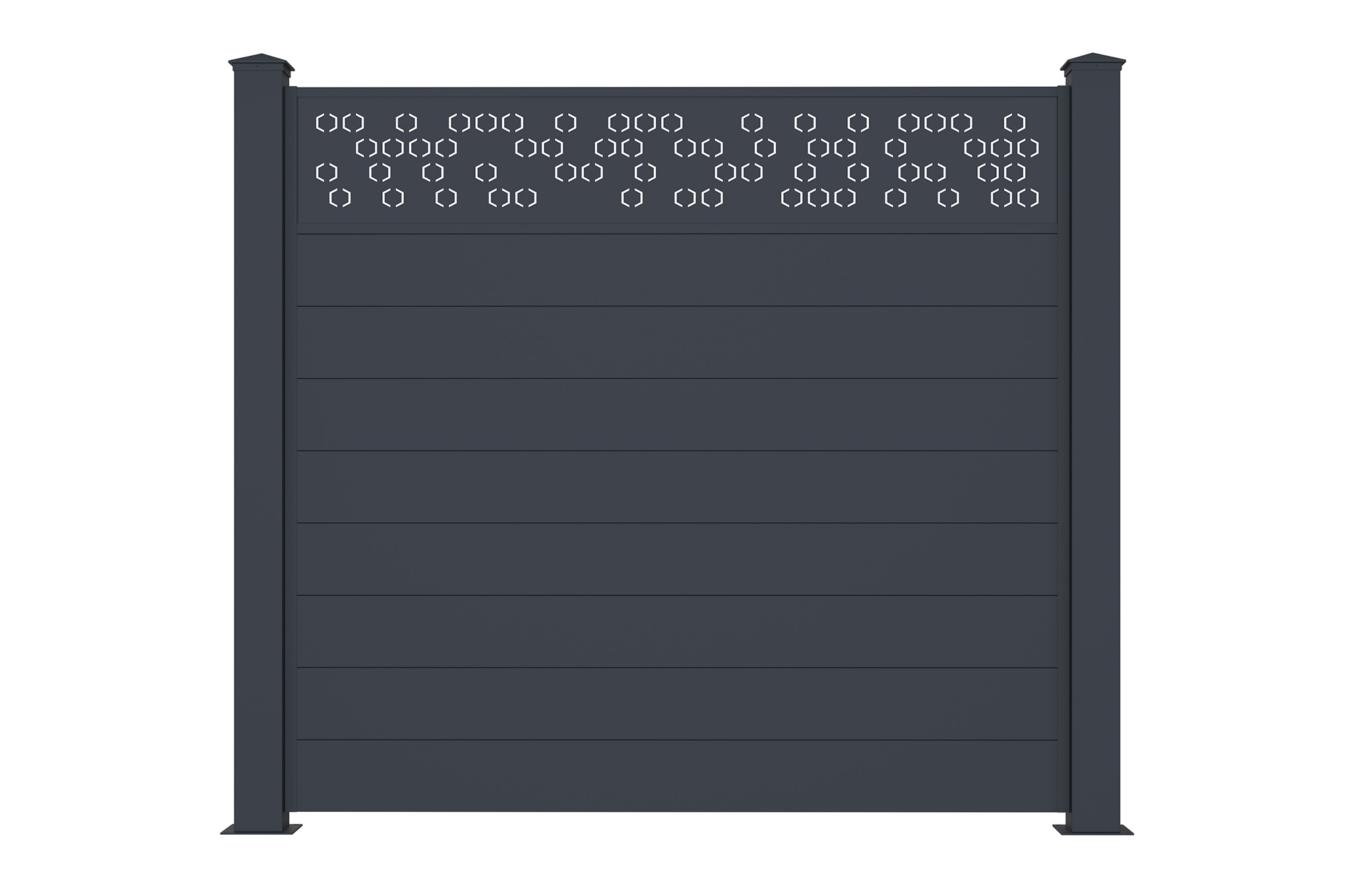
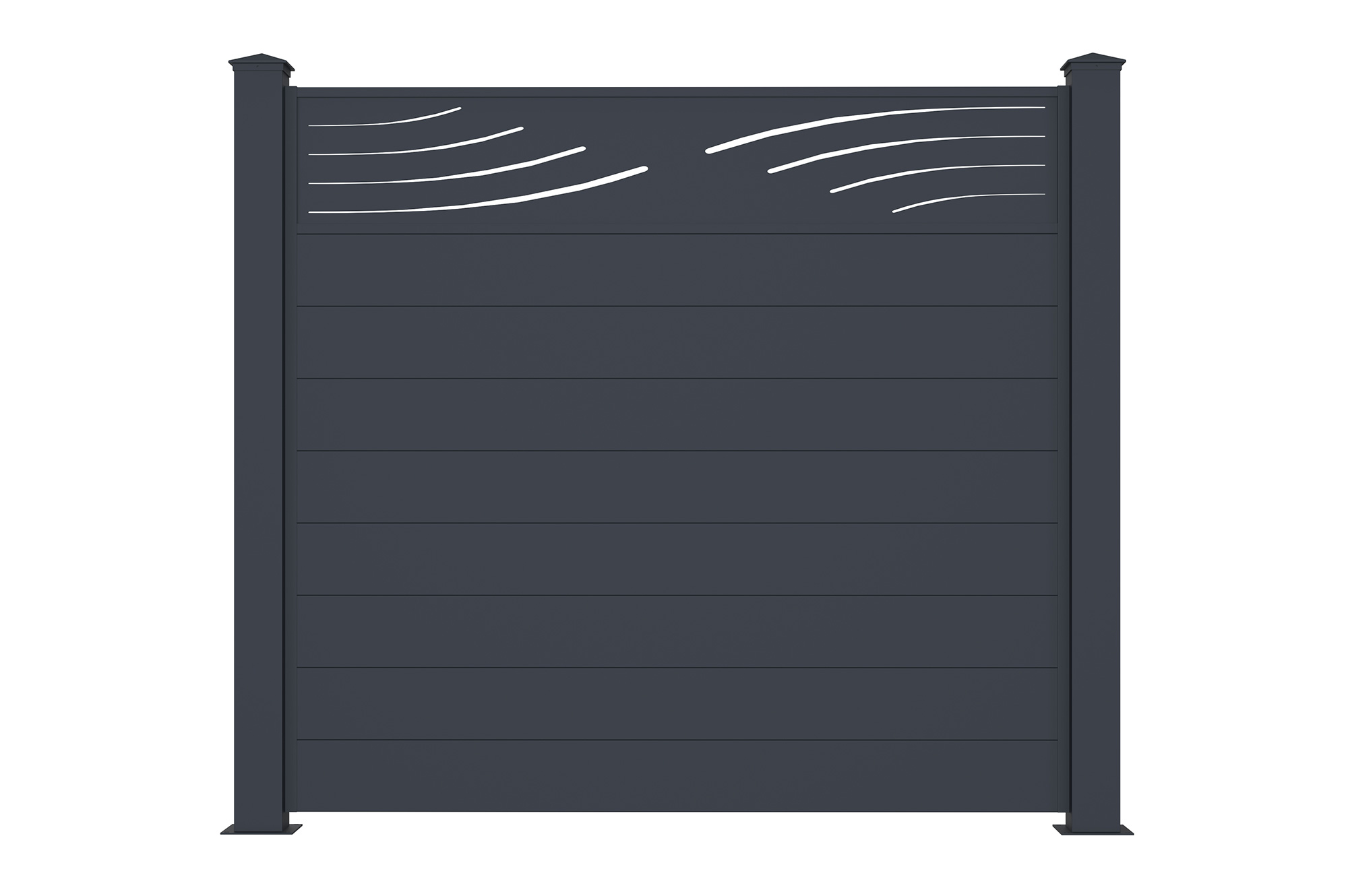
Pros
  • Excellent privacy at viewing angles
  • Very modern, clean aesthetic
  • Zero maintenance (powder-coated aluminium)
  • Less climbable than a solid wall
  • Colour customisable
Cons
  • May be classified as "visually opaque" if gaps too narrow
  • Higher cost than steel bars
  • May not satisfy natural park "traditional materials" preference
Best for: Areas where privacy matters and you want a contemporary look. Confirm gap ratio with Camara before committing.
3. Welded Mesh + Climbing Plants
Rede soldada + trepadeiras (jasmim, buganvilia, hera)
HIGHEST — Natural Park Favourite

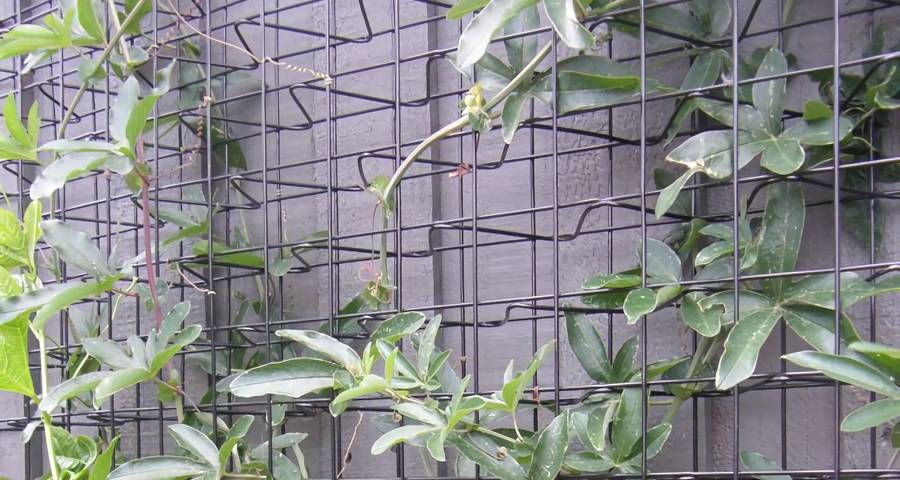
Steel welded mesh on top of the wall, planted with fast-growing evergreen climbers. Initially clearly permeable (passes inspection), becomes effectively opaque within 1-2 growing seasons. This is the unspoken workaround many properties in the Sintra-Cascais area use.
Pros
  • Highest approval likelihood in natural park zone
  • Becomes a green privacy screen over time
  • Ecologically positive (habitat, insects)
  • Very affordable
  • Natural aesthetic — blends into landscape
Cons
  • Takes 1-2 seasons to fill in
  • Requires ongoing pruning and maintenance
  • Mesh alone is relatively easy to cut
  • Plants may die in drought without irrigation
Best for: All boundaries, especially natural park-facing areas. The "officially permeable, practically opaque" approach.
4. Hardwood Timber Slats
Ripas de madeira com espacamento minimo
MODERATE — Gap Ratio Dependent

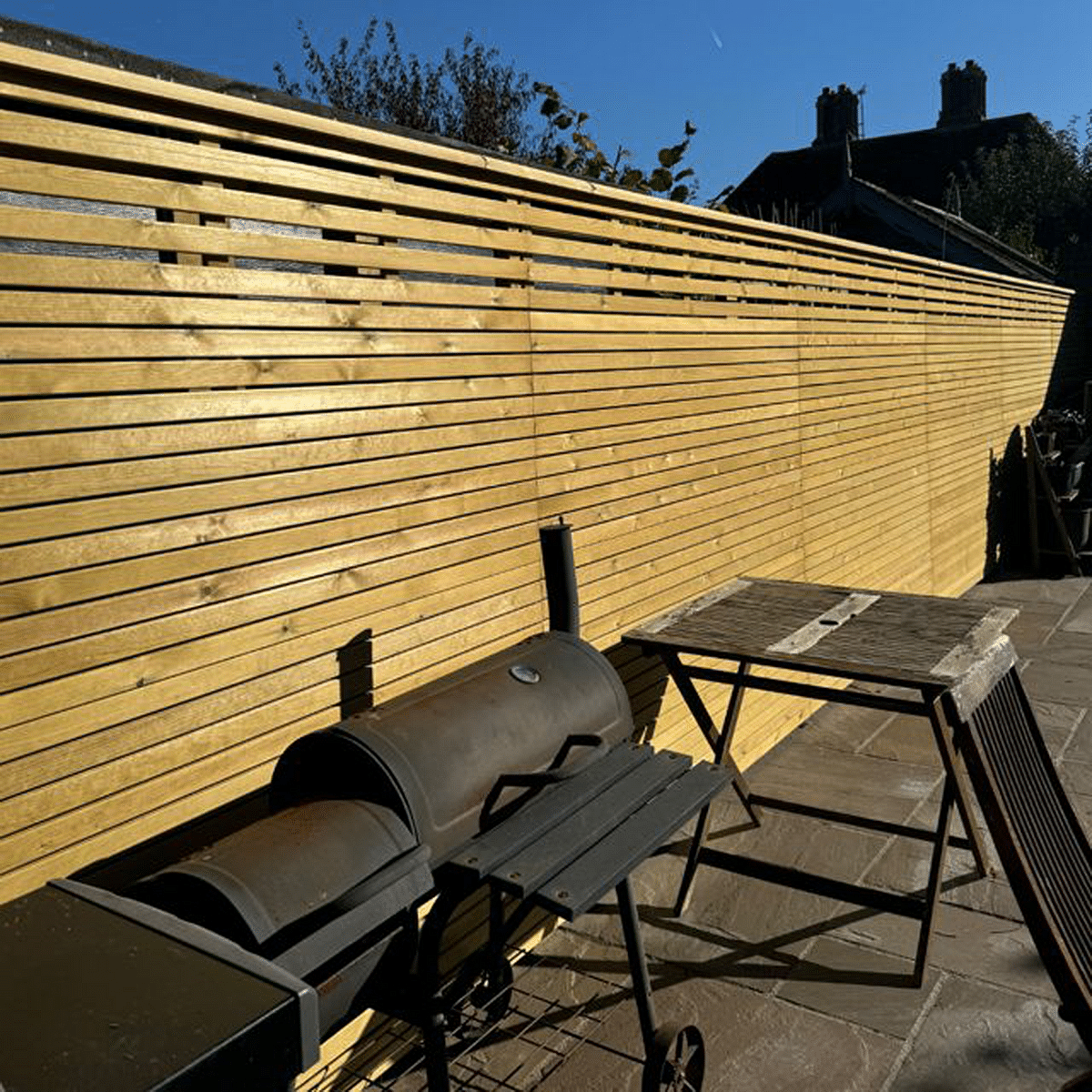
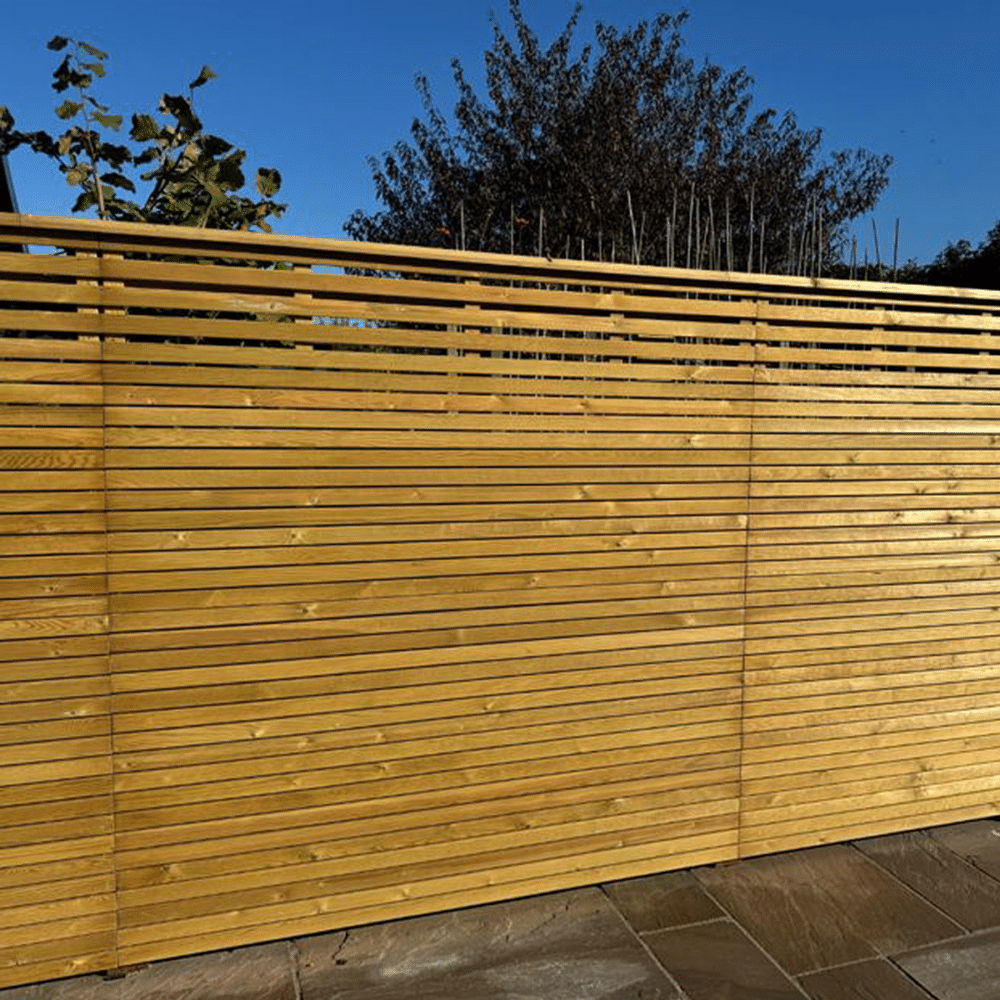
Timber slats with 1-2cm gaps technically count as permeable. Natural look that the council tends to like in this zone. Use treated hardwood (iroko, ipe) or treated pine for durability.
Pros
  • Council loves timber in natural park zone
  • Warm, high-end aesthetic
  • Harder to climb than metal
  • Good privacy with narrow gaps
Cons
  • Needs treatment every 2-3 years
  • Less secure than steel (can be broken)
  • Higher cost for quality hardwood
  • Whether 1-2cm gaps count as "permeable" varies by inspector
5. Gabion Walls
Muros de gabiao
GREY AREA — Visually Opaque Despite Permeability

Stone-filled wire cages. Structurally permeable to water and air (self-draining), but visually opaque. Whether gabions satisfy the "permeable" definition above 1.2m is a judgement call by the Camara. Can look very natural in the landscape with local stone.

Pros
  • Extremely strong and heavy — very secure
  • Natural stone aesthetic suits the area
  • Self-draining (good for slopes)
  • No maintenance
Cons
  • May be classified as opaque — confirm with Camara
  • Heavy — needs proper foundation
  • More expensive than mesh options

🔒 Anti-Climb & Security Add-Ons

These additions don't count toward wall height and dramatically improve security

Anti-Climb Spikes (Pontas)

Traditional in Portugal. Check municipal postura for road-facing restrictions. You may be liable if someone is injured. Common and widely tolerated.

Rotating Spinners / Roller Barrier

Best option for natural park zone — no sharp edges, wildlife-safe, very effective anti-climb. Rotating bars spin when grabbed, making climbing impossible. Humane and modern.

Electric Fence

Legal for private property under EN 60335-2-76. Must display warning signs. First energised wire typically at min 2.20m height (on top of wall). Contact Camara and PSP for local rules.

CCTV + Motion Lighting

Legal under Lei n.º 34/2013. Cameras must not capture public road or neighbouring properties (CNPD rules). Motion-activated floodlights are the single most effective deterrent according to police statistics. No height restrictions on camera poles.

📚 Legal Sources & References

All the documents that govern what you can and can't build

Portuguese Legal Framework

Document Reference Link
PDM de Cascais
The master plan — sets the 1.2m+0.6m rule
Aviso n.º 7339/2015, DR 2.ª serie Cascais.pt · PDF · DRE
RUEM Cascais
Municipal building regulations (2017)
Regulamento de Urbanizacao e Edificacao PDF
RGEU
National building code — origin of 1.8m rule (Art. 59)
Decreto-Lei n.º 38 382, de 07/08/1951 DRE (consolidated)
POPNSC
Sintra-Cascais Natural Park plan
RCM n.º 1-A/2004 + revisions ICNF page · DRE
RJUE
Which works need a permit vs. prior notification
Decreto-Lei n.º 555/99 DRE (consolidated)
Codigo Civil
Neighbour rights: views, light, hedges (Arts. 1344-1371)
Arts. 1344–1371 DRE (consolidated)
PDM + Natural Park overlay data
GIS data for protection zones
Open data Dados.gov.pt

Helpful Articles (Portuguese)

Licenciamento de Muros de Vedacao
Overview of wall licensing requirements
PT Engiobra
Vedacoes e Muros — Construir em Seguranca
Safety and legal requirements near municipal roads
PT AC Arquitetos
Cascais FAQ — Wall Notifications
Official Camara FAQ on what you need to submit
PT Cascais.pt

English-Language Resources

Building Permits in Portugal (Expatica) EN Expatica
Edge International Lawyers
Cascais-based, English-speaking, construction law
EN Edge Lawyers
Belion Partners
Expat property law specialists
EN Belion
Portugal Property Guide EN Property Guides

📞 How to Find Out What's Been Approved

Joao doesn't need to live in the area — the information is publicly accessible

1. Pedido de Informacao Previa

Best first step. Submit a formal information request to the Camara de Cascais Urbanismo department describing what you want to build. Low cost (<EUR 100), non-binding, gives you a written response on what they will approve for your specific plot. Joao can submit this as your architect.

2. Request Approved Projects

Under LADA (Lei n.º 26/2016), you have the right to request access to building permit files. Ask:
"Quais os projetos de muros de vedacao aprovados na freguesia de Alcabideche nos ultimos 5 anos?"

3. Cascais Urbanismo Online

Digital platform for submitting and tracking urbanistic processes. Some approved projects are searchable.

Cascais Servicos Online

4. Contact Directly

Camara de Cascais — Urbanismo
Praca 5 de Outubro, 2754-501 Cascais
Email: geral@cm-cascais.pt / urbanismo@cm-cascais.pt
Phone: +351 214 825 800

Junta de Freguesia de Alcabideche
(Malveira da Serra is part of this parish)
jf-alcabideche.pt — may have local knowledge of recent approvals

ICNF (Natural Park authority)
icnf.pt/contactos — for parecer requirements

Recommended Next Steps

  1. Ask Joao to submit a Pedido de Informacao Previa to the Camara de Cascais. Describe your security concerns and ask what they will approve for your specific plot. Cost: <EUR 100.
  2. Confirm your ICNF sub-zone. Check whether your plot falls in Protecao Total, Parcial, or Complementar — this changes what materials you can use. The GIS data is here.
  3. Document your break-in history. If you have police reports (participacoes), collect them. Security concerns are the strongest justification for a formal exception request.
  4. Consider the combo approach: Steel bars or mesh on top (compliant) + climbing plants for privacy (grows in) + roller barrier or spikes on top (anti-climb) + CCTV & motion lighting (deterrent). Best security without needing exceptions.
  5. Ask Darcos (Pedro Mota) what they've recently built in the area — as your contractor, they may have direct experience with what inspectors actually accept locally.